2022–Present
Senior Machine Learning Scientist · DeepHealth
Working on deep learning for lung disease detection, including model development, data selection, and reliability- and regulation-oriented workflows.
Machine Learning Researcher · Mathematician

I am a machine learning researcher with a background in mathematics, computer vision, and applied AI. My work focuses on the geometry and structure of data, learned representations, and data-generating processes, with particular interest in scientific machine learning, manifold learning, generalization, and model reliability.
I aim to develop measurable, mathematically grounded methods that connect theory with empirical analysis, open-source software, and real-world applications. I am especially interested in collaborations involving scientific data, simulations, imaging, and structured transformations.
Working on deep learning for lung disease detection, including model development, data selection, and reliability- and regulation-oriented workflows.
Research in computer vision and machine learning, including h-NNE, supervision, and construction-related vision projects.
Built computer vision and activity-recognition solutions for aircraft handling processes and operational analytics.
Worked on predictive modeling, optimization, data infrastructure, and AWS-based systems in manufacturing and supply-chain settings.
Full-stack development for scheduling and time-tracking software in an agile environment.
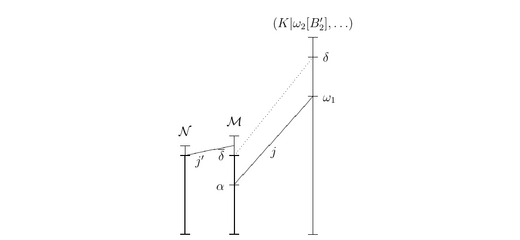
Research in mathematical logic and set theory as a Marie Skłodowska-Curie fellow.
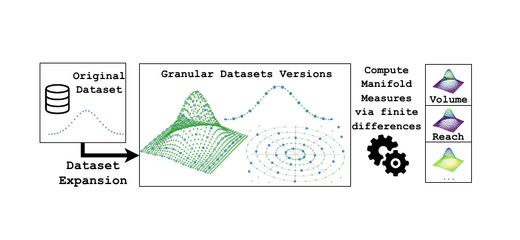
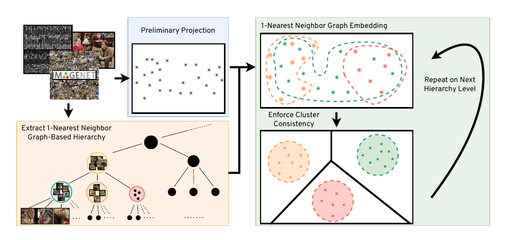
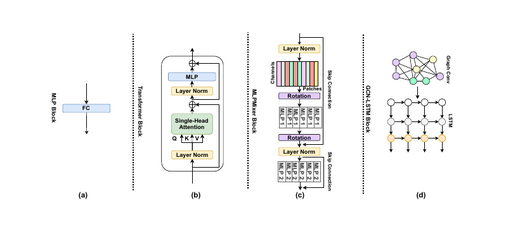
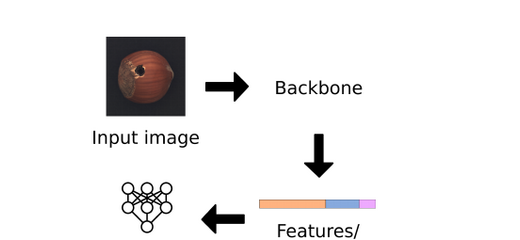
Image-based construction progress monitoring in a practical engineering context.
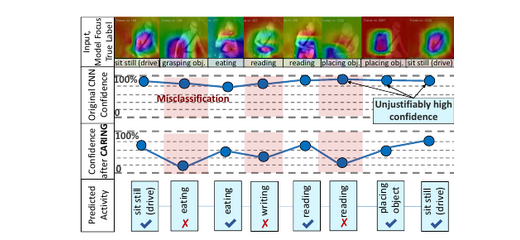
Work on calibration and confidence estimation for driver observation models under real-world deployment shifts.
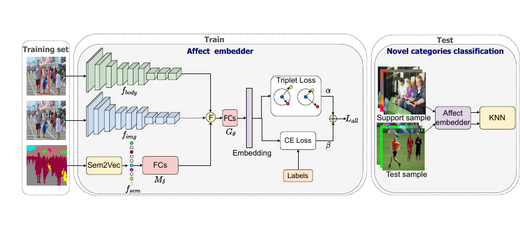
A benchmarking and experimentation toolkit for studying geometric properties of synthetic and real-life-like data manifolds.
Co-organized tutorial on dimensionality reduction, clustering, and structure in data for computer vision and machine learning.
Curated reading and implementation lists for two closely related toolboxes: dimensionality reduction and clustering.
An open-source toolkit accompanying our ICML 2024 position paper, with baselines and evaluation tools for time-series anomaly detection.
A hierarchical dimensionality reduction method related in spirit to t-SNE and UMAP, but designed for speed, simplicity, and structured coarse-to-fine exploration.